

 KIGALI — A pointed but measured exchange on social media platform X has thrust a longstanding question about Rwanda’s governance into the public spotlight: when senior government officials communicate with the nation, who are they actually speaking to?
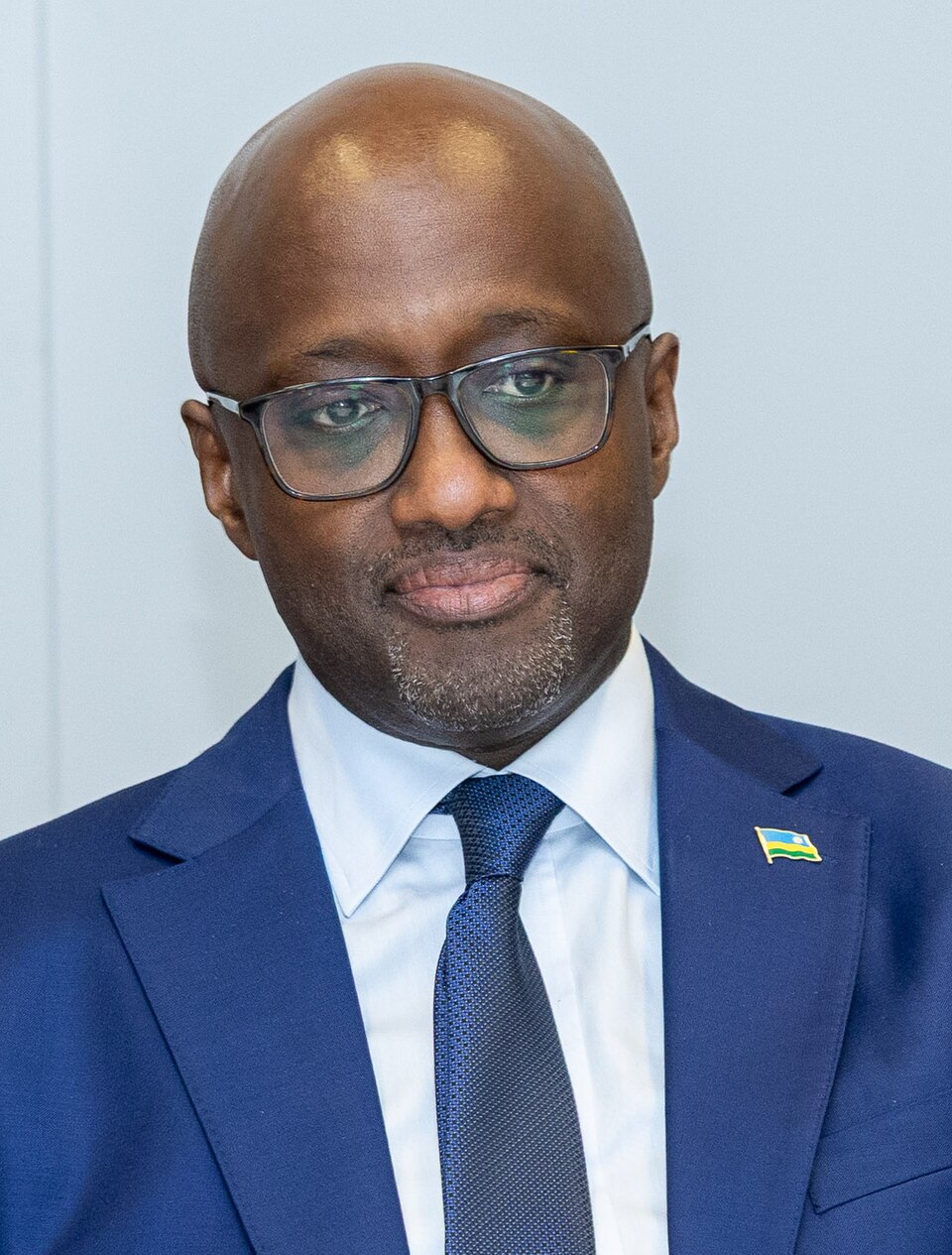
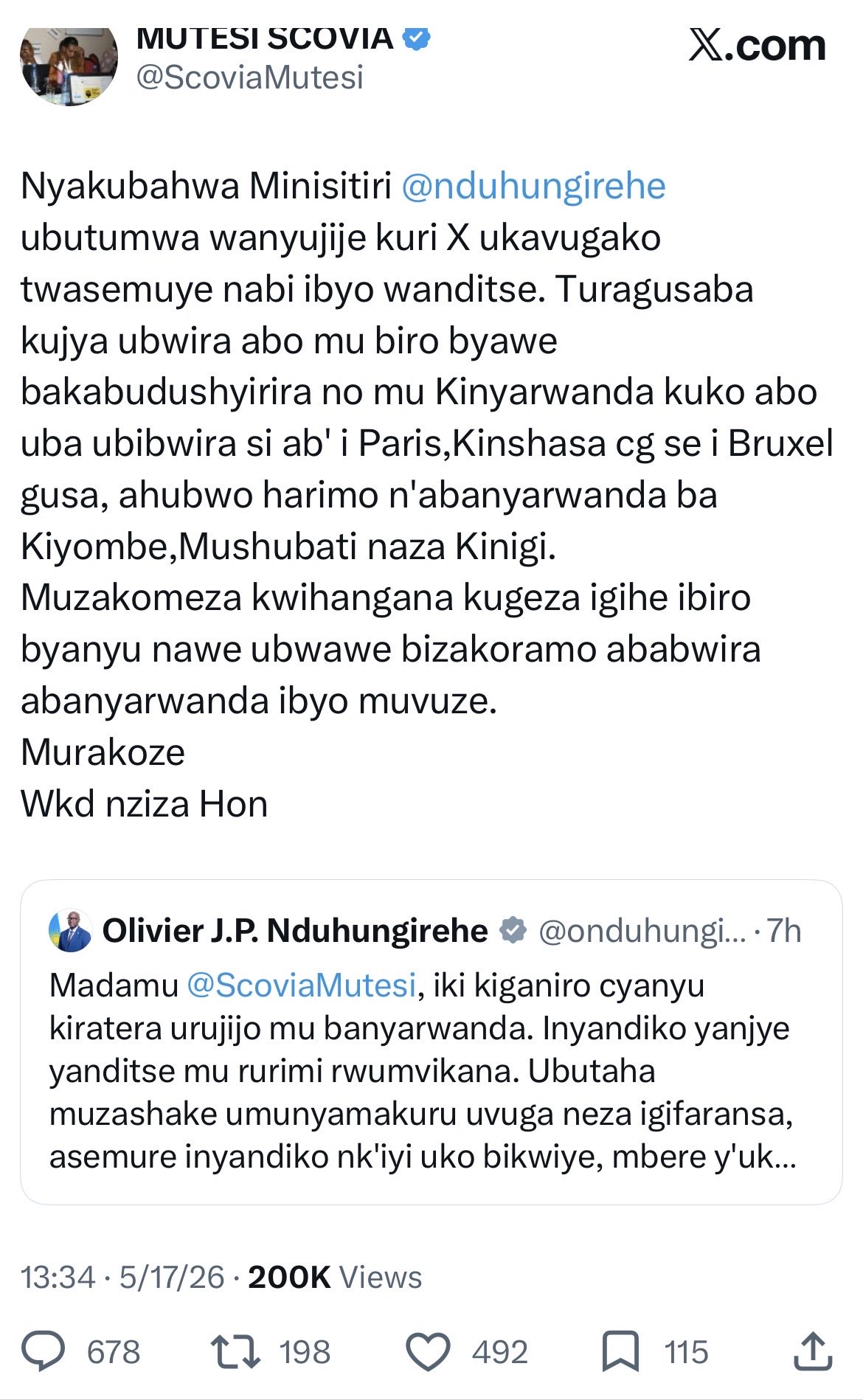
The debate was sparked after Foreign Affairs Minister Olivier J.P. Nduhungirehe published a message on X written in French which was subsequently discussed by media personality Mutesi Scovia of Mama Urwagasabo TV The Minister responded publicly suggesting that Scovia had misrepresented his words and urging her to consult a journalist proficient in French before commenting on his posts
His response, though truncated in its public circulation, was widely interpreted as an implicit defense of French as an acceptable language of government discourse and as dismissive of the linguistic realities facing millions of ordinary Rwandans
Scovia’s Response: A Plea for Inclusive Communication
Rather than escalating the exchange, Scovia replied with composure, directing her remarks at the structural issue she identified Writing in Kinyarwanda she addressed the Minister respectfully while making a pointed argument about the duty of public officials toward the citizens they serve
She reminded the Minister that his audience extends far beyond Rwandan diplomats and expatriates in Paris Kinshasa or Brussels It includes ordinary citizens in rural communities in Kiyombe, Mushubati, and Kinigi — who depend entirely on Kinyarwanda to understand what their government is doing and saying She expressed confidence that his office would in time, ensure its communications reached all Rwandans equally and she closed the message by wishing him a good weekend
The tone was patient The substance was serious
Why the Exchange Resonated
The post accumulated 200,000 views, 678 replies, 492 likes, and 198 retweets within hours figures that reflect not merely a viral moment, but a suppressed conversation finally finding public voice
Rwanda’s Constitution recognizes Kinyarwanda, English and French as official languages In practice however formal government statements diplomatic correspondence and ministerial social media posts frequently default to French or English — languages inaccessible to a large share of the population, particularly those in rural and semi-urban communities where Kinyarwanda is the sole medium of daily life
The exchange did not invent this tension It named it.
The Broader Context
Rwanda’s language landscape has evolved significantly in recent decades. In 2008, the government shifted the national education system from French to English as the primary medium of instruction — a historic policy pivot that deepened the linguistic divide between urban professional classes and rural citizens who never had meaningful access to either foreign language.
Kinyarwanda spoken natively by nearly all Rwandans across every province and social class remains the only language that unites the country without exception When ministers diplomats and senior officials choose to communicate primarily in French or English on public platforms they are whether intentionally or not narrowing their audience to a privileged subset of the population
No law explicitly requires government ministers to communicate in Kinyarwanda on personal or official social media accounts But for many Rwandans who followed this exchange, the absence of such a requirement is itself part of the problem
Public and Expert Reaction
Online responses reflected a divided but deeply engaged public A significant number of users rallied behind Scovia’s position sharing her post widely and adding personal accounts of encountering French-language government communications they could not access without translation Others defended the Minister’s right to communicate in any of Rwanda’s three official languages questioning whether Scovia’s reading of his original message was fair
Legal commentator Dr. Dash contributed analysis referencing constitutional principles related to freedom of expression and public communication While no specific constitutional articles were formally cited in the commentary that circulated publicly his intervention amplified the debate and drew further attention to the question of where institutional authority ends and civic accountability begins
Communication experts observing the exchange noted that it reflects a pattern common across post-colonial African governance: the continued prestige and institutional dominance of European languages set against a constitutional commitment to indigenous national languages The tension is not unique to Rwanda, but it is particularly visible in a country that has invested heavily in its image as a model of transparent, citizen-focused administration
Where Matters Stand
At the time of publication Minister Nduhungirehe had not issued a comprehensive formal response to Scovia’s reply No official legal position had been released by government authorities and no formal proceedings of any kind had been announced in connection with the exchange
Scovia’s closing words that she would wait patiently for the day when the Minister’s office communicates his statements to all Rwandans were widely read not as a threat but as a deliberate and dignified challenge. A challenge addressed not just to one minister but to a system.
What is already clear is that a media figure with a platform chose to use it for a structural critique rather than personal conflict and that hundreds of thousands of Rwandans found that critique worth their attention, their engagement and their time.
Phiba News will continue to follow developments related to this story.
Source material: Public posts on X (Twitter) from @ScoviaMutesi and @onduhungirehe — May 17, 2026
Category: Governance · Media Freedom · Rwanda · Language Policy
Published: Phiba News Desk, Kigali — May 17, 2026