
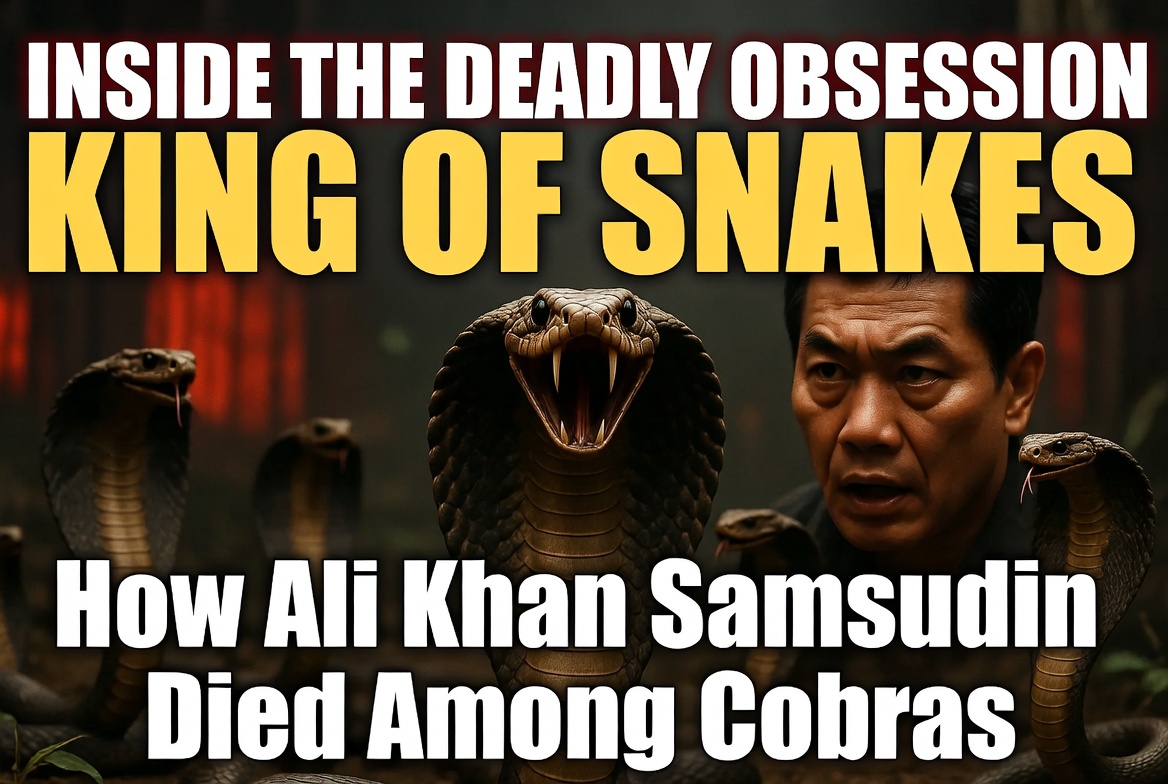
 Kuala Lumpur, Malaysia — In the 1990s, Ali Khan Samsudin rose to international attention through a series of dangerous performances that stunned audiences and alarmed experts alike.
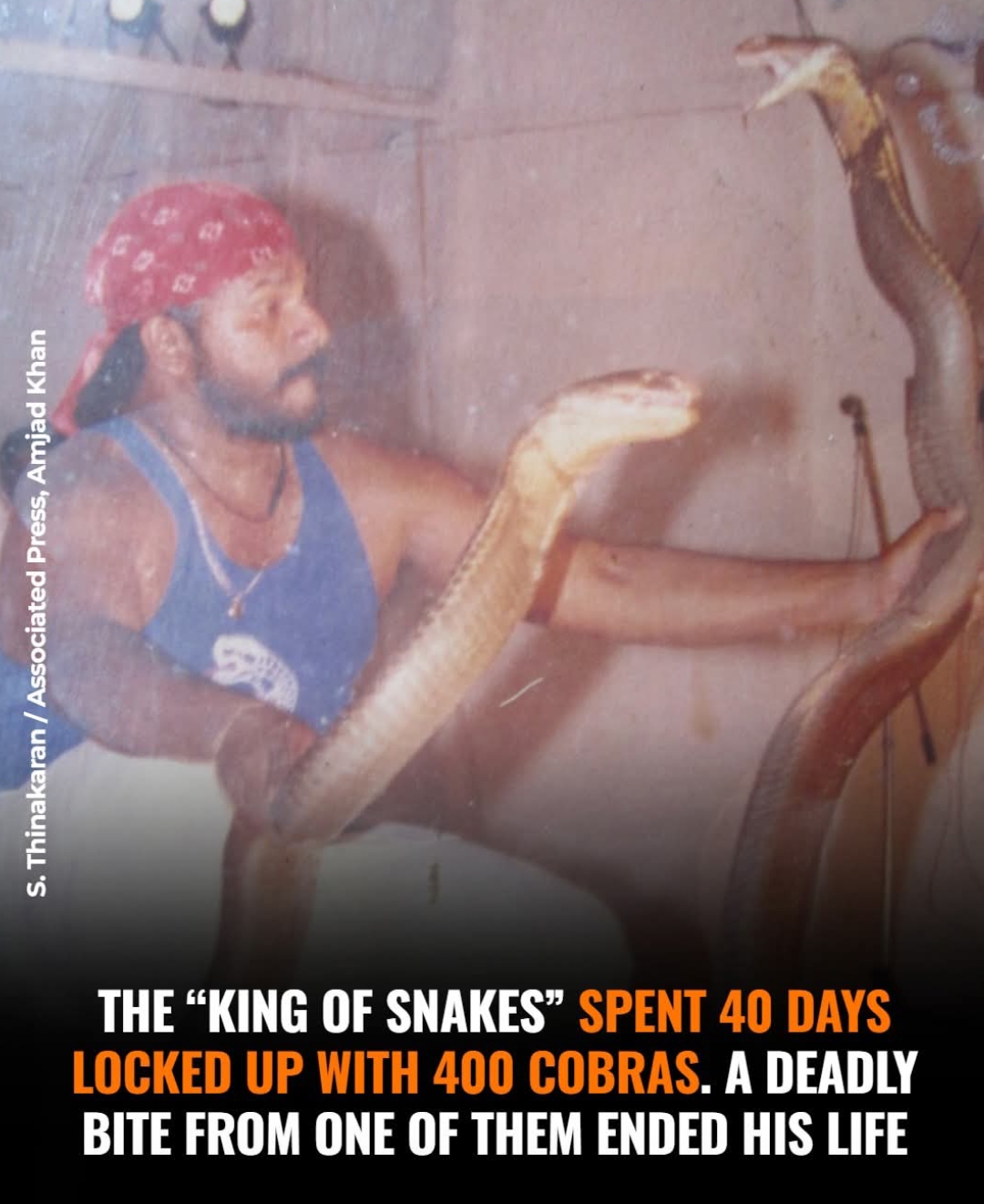
Best known as the “King of Snakes,” Samsudin built his reputation by voluntarily locking himself inside a small enclosure with more than 400 cobras for 40 days. For up to 12 hours each day, he remained surrounded by some of the world’s most venomous snakes, claiming to demonstrate control and mastery over them.
The extreme nature of the stunt drew widespread media coverage and made him a well-known figure in Malaysia and beyond.
A Career Defined by Risk
Despite his fame, Samsudin’s performances were widely considered dangerous. Throughout his career, he reportedly suffered multiple snake bites, raising concerns among observers about the long-term risks he was taking.
Wildlife experts have often warned that even experienced handlers cannot fully control highly venomous species such as cobras, making such acts inherently unpredictable.
Fatal Encounter
In 2006, during a live performance in Kuala Lumpur, Samsudin’s career took a tragic turn. He was bitten on the hand by a king cobra, one of the most dangerous snake species in the world.
Although he was rushed to hospital, his condition deteriorated over the following days. He later died from complications linked to the bite, bringing an end to a career that had long balanced on the edge of danger.
Public Reaction
His death sparked mixed reactions among the public and observers:
Some described him as a fearless performer who pushed human limits.
Others argued that his acts highlighted the dangers of risking life for entertainment.
Many saw his story as a cautionary tale about the cost of extreme fame.
A Lasting Legacy
Ali Khan Samsudin’s life remains a striking example of the fine line between courage and risk. While he captivated audiences with his unusual abilities, his death also underscored the unpredictable nature of working with wild and venomous animals.
His story continues to be cited in discussions about performance safety and the ethical boundaries of entertainment involving dangerous wildlife.
Sources:
Compiled from international media reports, documented accounts of his performances, and public commentary on his life and death.