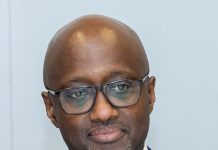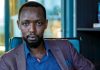

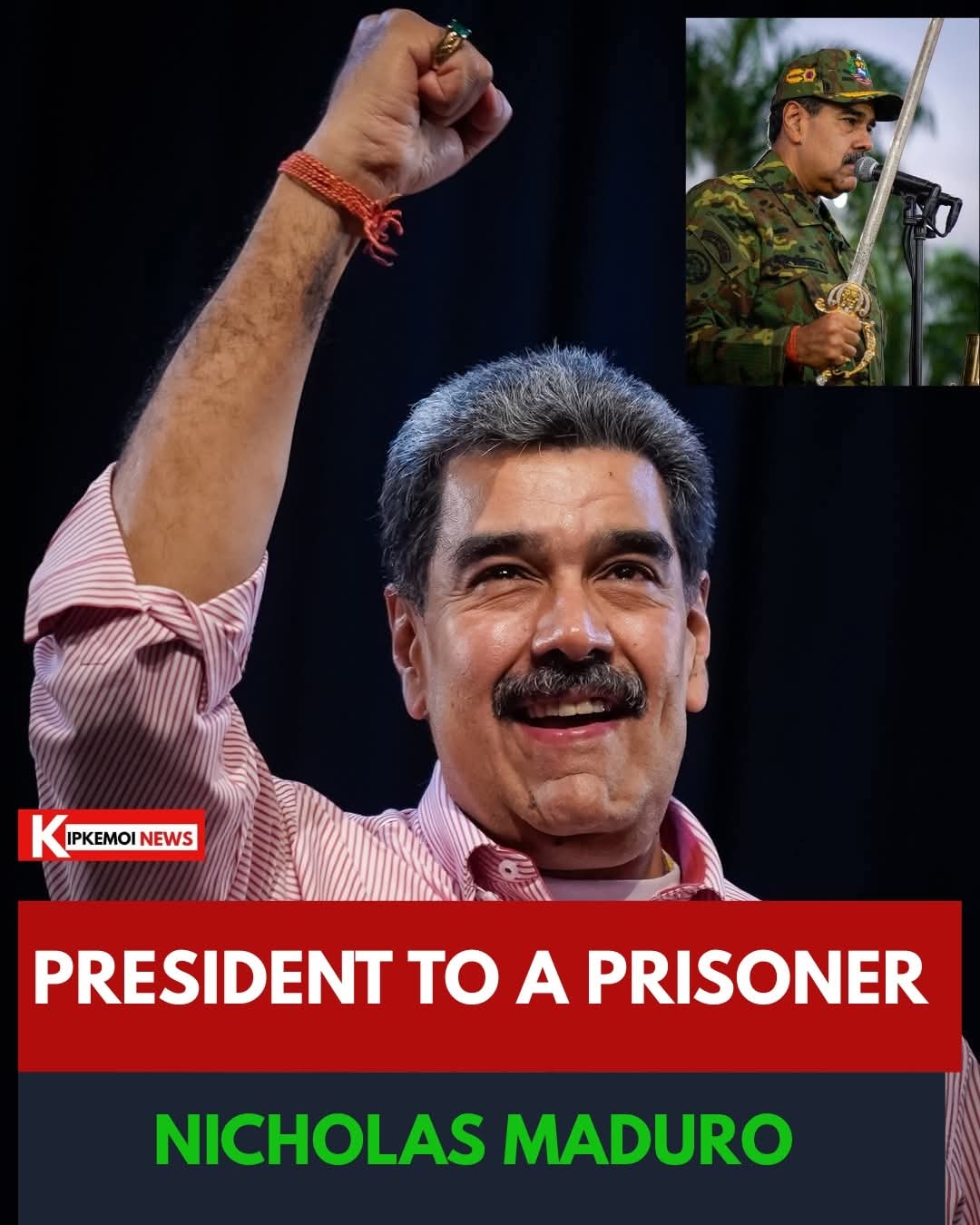
🔴THIS IS NICOLAS MADURO 🚨
The former president of Venezuela. He is now a prisoner of America, facing charges related to drug trafficking and alleged links to gangs that are designated as terrorist organizations. Maduro denies all the charges.
Maduro and his wife were captured and flown out of Venezuela by the U.S military on Saturday morning. Shortly afterwards, Donald Trump announced that the United States had taken over and would run that country until a new leader is installed.
Venezuela’s Supreme Court ordered that Maduro’s deputy, Delcy Rodríguez, takeover as president to avoid a leadership vacuum.
💥BACKGROUND 👉Who is Maduro
Nicolás Maduro has been president of Venezuela since 2013. He rose from humble beginnings as a bus driver, later becoming a trade union leader.
His political journey began in the 1990s when he joined the MBR movement formed by Hugo Chávez.
▪️In 1992, Chávez led a failed coup and was imprisoned. Maduro campaigned for his release and later became part of the movement that backed Chávez’s successful presidential bid in 1998. Around the same time, Maduro became an MP.
▪️By 2005, he had risen to become president of the National Assembly, a role similar to Speaker of Parliament.
Maduro soon became a leading member in Hugo Chávez’s government. As you may know, Hugo Chávez positioned Venezuela firmly against U.S. influence and rejected external control over his country’s resources.
📑For context, Venezuela has the world’s largest oil reserves. It is a major player in the global oil sector, though its role is diminished by low production.
Chávez introduced very strict oil rules for foreign companies, and any company that refused these terms had its assets taken over by the state. This forms part of what Donald Trump means when he says America lost money in Venezuela.
In 2002, the United States backed a failed coup against Chávez. This worsened relations and emboldened Chávez in his anti-imperialist fight. In this sense, he closely resembled Robert Mugabe in his emphasis on national sovereignty and territorial integrity. In 2006, Chavez famously called George Bush “the devil” at the UN General Assembly and described the U.S. as “the biggest menace to our planet.”
Maduro was placed at the centre of this diplomatic conflict after being appointed foreign minister in 2006. At one point, he was briefly detained at a New York airport after refusing to be searched. U.S. officials later apologized, saying the airport staff were unaware at the time that he was Venezuela’s foreign minister. But Maduro would have none of it, calling the American government “racist” and “Nazi”.
By 2012, Maduro was widely viewed as Chávez’s chosen successor. Chávez had been battling cancer which claimed his life in 2013. After Chávez’s death , Maduro became interim president. A presidential election was held in 2013, and Maduro won by a very narrow margin. The opposition rejected the result, but Maduro was officially declared the winner.
Two years later, Venezuela held parliamentary elections. The opposition coalition won a majority in the National Assembly, setting the stage for the crisis that followed. This meant that even if Maduro won the next presidential election scheduled in 2018, he would be forced to govern with a parliament dominated by the opposition.
When the 2018 presidential election was held, Maduro was declared the winner but, just like in 2013, the opposition rejected the outcome. However, things were different this time around. The opposition controlled Parliament. It used that control to declare the presidency vacant. Under Venezuela’s constitution, the Speaker of Parliament assumes power in such cases. The speaker at the time was opposition leader, Juan Guaidó, who declared himself president.
The United States quickly recognized Juan Guaidó as Venezuela’s leader and gave his team diplomatic recognition and control over some state assets held overseas. However, Guaidó failed to take power because he never gained control of the military, security forces, courts, or other state institutions. All of these remained loyal to Maduro. As a result, Guaidó had “Western support” but no real power inside Venezuela, Maduro remained in charge. He quickly neutralized Parliament and used the judiciary to remove MPs. Protests were violently clamped down on, and opposition leaders were arrested or forced into exile.
The crisis got worse when the United States expanded existing financial sanctions and imposed major oil sanctions. Maduro accused the United States of trying to effect regime change. In practice, the United States treated Maduro as an illegitimate leader, while Maduro described the U.S. as an imperialist enemy.
Venezuela held another election in 2024, but it produced the same disputed outcome. Many international observers and governments said the vote was not free or fair but Nicolás Maduro remained in power.
That is the background of the Maduro story
💥It is important to note that👇
U.S. influence in Venezuela began when oil was discovered. American companies became major players in the oil industry, and from that point on, U.S. economic and political interests were closely linked to Venezuela.
Even after Carlos Pérez nationalized the oil industry in the 1970s, U.S.–Venezuela relations remained cordial. Special arrangements were made to allow American companies to continue operating with few restrictions.
Things changed when Hugo Chávez came to power and began promoting a strong message of national sovereignty.
From this history, you can see a clear pattern. The U.S. has, for many years, tried to exert influence over Venezuela. It demonstrated this by backing a failed coup against Hugo Chavez in 2002. When the coup flopped, America hoped that the removal or death of Hugo Chávez would open the door to a different kind of leader, but that also did not happen. The United States then took advantage of the 2018 presidential election crisis by backing its preferred candidate, yet that effort failed as well.
Now, the U.S. has used criminal charges to dethrone Maduro. This is not the first time America has taken such an approach, nor is it likely to be the last. Similar actions have occurred in Iraq, Afghanistan, Libya, and Iran. Ironically, all these countries are rich in oil.
The key difference this time is that America is no longer hiding behind diplomacy or propaganda. Donald Trump has openly stated that the U.S. will run Venezuela and generate profits for America, while at the same time promising democracy and greater prosperity for the Venezuelan people.